

The Beatles weren’t just a band; they were a cultural phenomenon that swept the globe faster than you can say “I want to hold your hand.” From the early 1960s to the end of the decade, their catchy tunes and charming personalities captivated millions, making them the ultimate soundtrack for a generation. If you’ve ever wondered when this legendary quartet ruled the airwaves and hearts, you’re in for a treat.
Overview of The Beatles’ Popularity
The Beatles achieved widespread fame primarily during the 1960s. Their popularity surged after their debut on “The Ed Sullivan Show” in February 1964, which attracted an estimated 73 million viewers. This performance marked the beginning of Beatlemania in the United States, characterized by frenzied fans and a tidal wave of media coverage.
Albums such as “Please Please Me,” “Rubber Soul,” and “Revolver” showcased their evolving musical style. These records combined innovative songwriting with diverse influences, helping The Beatles to dominate the charts. In fact, they held the top five positions on the Billboard Hot 100 in April 1964, a feat unmatched in music history.
Cultural shifts during the 1960s further fueled their popularity. The emergence of youth culture and countercultural movements aligned with their music’s themes of freedom and self-expression. Concerts and appearances around the world drew massive crowds, reinforcing their status as rock icons.
Their experimentation with different genres also contributed to their acclaim. Incorporating elements of rock, pop, and even classical music, The Beatles expanded the boundaries of popular music. With each release, they pushed creative limits, attracting both critics and fans.
Lasting influence defines their legacy. Songs like “Hey Jude,” “Let It Be,” and “Yesterday” continue to resonate, ensuring The Beatles remain relevant decades after their initial rise. Many artists cite them as key influences in their own musical journeys, solidifying The Beatles’ place in cultural history.
Early Years of The Beatles
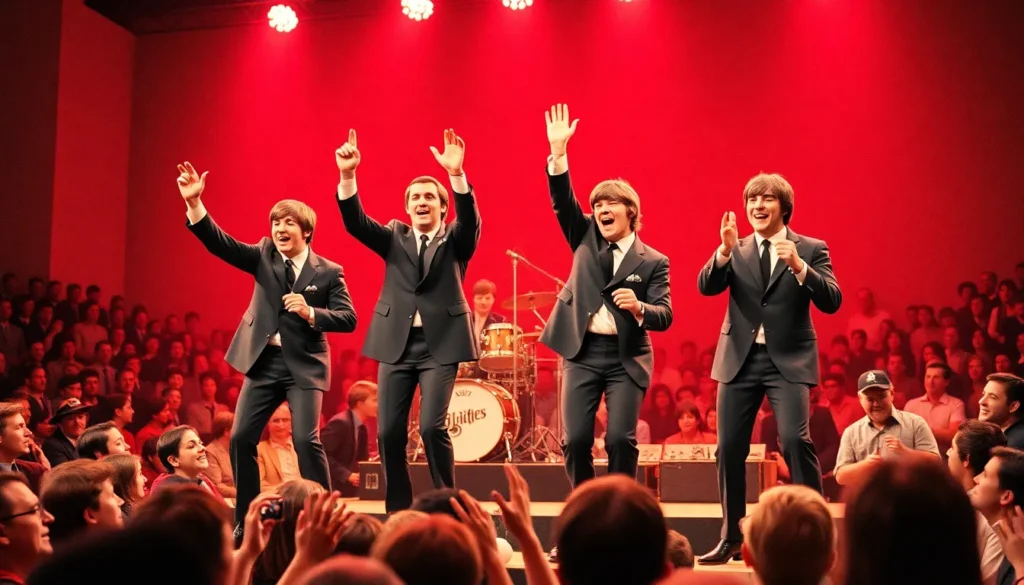
The Beatles emerged as a groundbreaking musical force in the early 1960s, capturing the hearts of audiences worldwide. Their unique sound and charisma led to a profound cultural impact.
Formation and Initial Success
In 1960, John Lennon, Paul McCartney, George Harrison, and drummer Pete Best formed The Beatles in Liverpool. The band initially performed in clubs, honing their craft and developing their signature style. Their first recording at EMI in 1962, “Love Me Do,” gained traction, reaching number 17 on the UK charts. Ringo Starr replaced Best later that year, solidifying the lineup. The group’s early success laid the foundation for their subsequent rise, with songs that combined catchy melodies and relatable lyrics resonating with a wide audience.
Rise to Fame in the UK
By 1963, The Beatles achieved widespread popularity in the UK with hits like “Please Please Me” and “She Loves You.” Their infectious tunes and energetic performances created a frenzy among fans. The band’s appearance on TV shows propelled them further into the limelight. Notably, “I Want to Hold Your Hand” topped the charts in late 1963, setting the stage for their iconic debut on “The Ed Sullivan Show” in February 1964. This moment marked the beginning of Beatlemania, as the group’s appeal transcended generations.
The British Invasion
The Beatles ushered in a transformative era in music known as the British Invasion, captivating American audiences in the 1960s. Their arrival marked a significant cultural shift, with their music resonating deeply across the nation.
Impact on American Music Scene
The Beatles’ impact on the American music scene was profound and far-reaching. Their innovative sound and style inspired countless artists and bands, reshaping the landscape of popular music. Rock and roll took on new dimensions, integrating various genres like folk, pop, and psychedelia. Acts such as The Beach Boys and The Byrds began experimenting with their sound, influenced by The Beatles’ successful approach. Chart performance showcased their influence; by 1965, they firmly established themselves as leaders in the industry. Record sales soared, and their concerts drew massive crowds, proving their unrivaled popularity during this era.
Key Albums and Hits
Several key albums and hits solidified The Beatles’ legacy. “Rubber Soul,” released in 1965, featured sophisticated songwriting and marked a creative turning point. Tracks such as “Norwegian Wood” and “In My Life” showcased their lyrical depth. “Revolver,” another critical release in 1966, further expanded their musical experimentation with tracks like “Eleanor Rigby” and “Tomorrow Never Knows.” Their famous songs, including “I Want to Hold Your Hand” and “A Hard Day’s Night,” achieved chart-topping success. By April 1964, The Beatles held the top five spots on the Billboard Hot 100, a record that illustrated the heights of their popularity and cultural impact.
Cultural Influence in the 1960s
The Beatles significantly shaped culture during the 1960s, influencing music, fashion, and lifestyle. Their presence marked a transformative period that defined the generation.
Fashion and Lifestyle Changes
Style changes emerged prominently with The Beatles’ rise. They popularized mod fashion, characterized by tailored suits and unique hairstyles. This new look resonated with youth, encouraging individuality and self-expression. Fans eagerly adopted similar clothing and hairstyles, creating a cultural phenomenon. Their influence inspired other artists to experiment with fashion, further merging it with musical identity. Events like the 1967 Summer of Love showcased the blending of music and lifestyle, as The Beatles’ image became synonymous with the counterculture movement.
Contributions to Music and Art
Musical contributions from The Beatles transformed popular music. They experimented with diverse genres, incorporating elements of folk, rock, and avant-garde. Tracks like “Rubber Soul” highlighted their innovative songwriting and artistic growth. Collaborations with renowned artists and producers expanded their creative horizons, leading to iconic albums. Their impact on music extended beyond sound, influencing visual art and multimedia projects. Documentaries, films, and album covers became artistic expressions, reflecting societal values while pushing artistic boundaries. The Beatles’ pioneering spirit redefined the music landscape, inspiring future generations of artists.
Decline of Popularity and Breakup
As The Beatles reached the pinnacle of their fame, various factors contributed to their decline and eventual breakup.
Factors Leading to Disbandment
Internal tensions emerged within the band during the late 1960s. Disagreements over musical direction intensified, as members sought to explore individual projects. Additionally, management issues arose, particularly with the death of their manager Brian Epstein in 1967. Epstein’s absence left a leadership void, complicating business decisions and contributing to discord. Personal lives also played a role. John Lennon’s increasing interest in avant-garde art and activism diverged from the group’s original vision, while Paul McCartney pursued more melodic pop influences. The culmination of these factors led to increasing separations, ultimately setting the stage for their disbandment in 1970.
Lasting Legacy and Influence
Despite disbandment, The Beatles’ influence endures in contemporary music. Iconic albums, such as “Sgt. Pepper’s Lonely Hearts Club Band,” transformed artistic standards in recording and songwriting. Their innovative blending of genres paved the way for the diversity seen in modern music. Countless artists cite The Beatles as primary inspirations, demonstrating their ongoing relevance and power. Cultural shifts, driven partly by their music, continue resonating across generations. Even today, their songs remain a staple in popular culture, affirming their status as timeless icons in the music industry.
The Beatles’ rise to fame marked an extraordinary chapter in music history. Their innovative sound and cultural impact defined an era that continues to resonate today. Even after their disbandment, their legacy remains unshaken, influencing countless artists and shaping the landscape of popular music.
As their timeless songs echo through generations, The Beatles’ influence transcends mere entertainment. They’ve become symbols of creativity and artistic freedom, inspiring new waves of musicians and fans alike. Their journey from Liverpool clubs to global superstardom illustrates the power of music to unite and inspire, ensuring their place as one of the most iconic bands in history.